
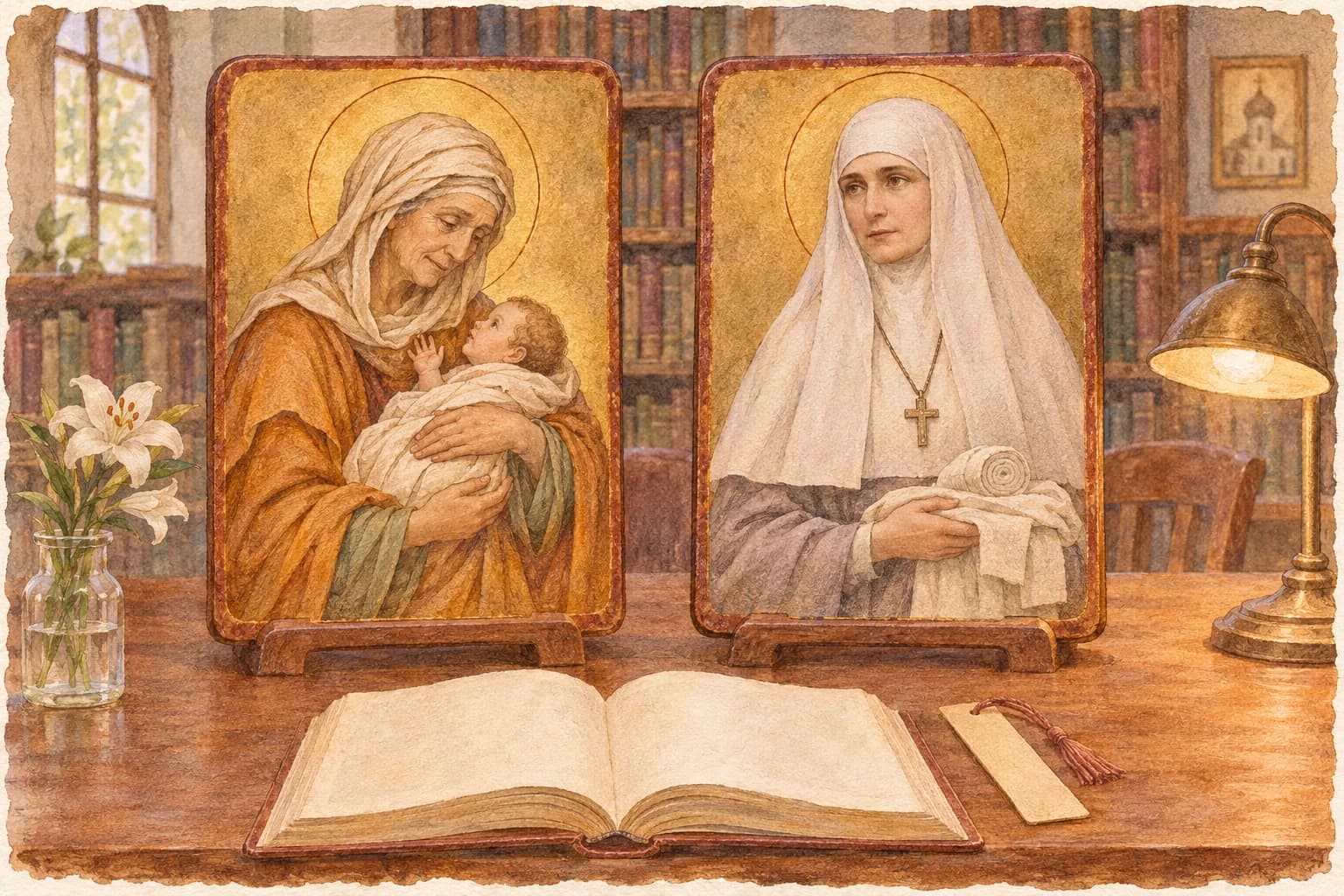
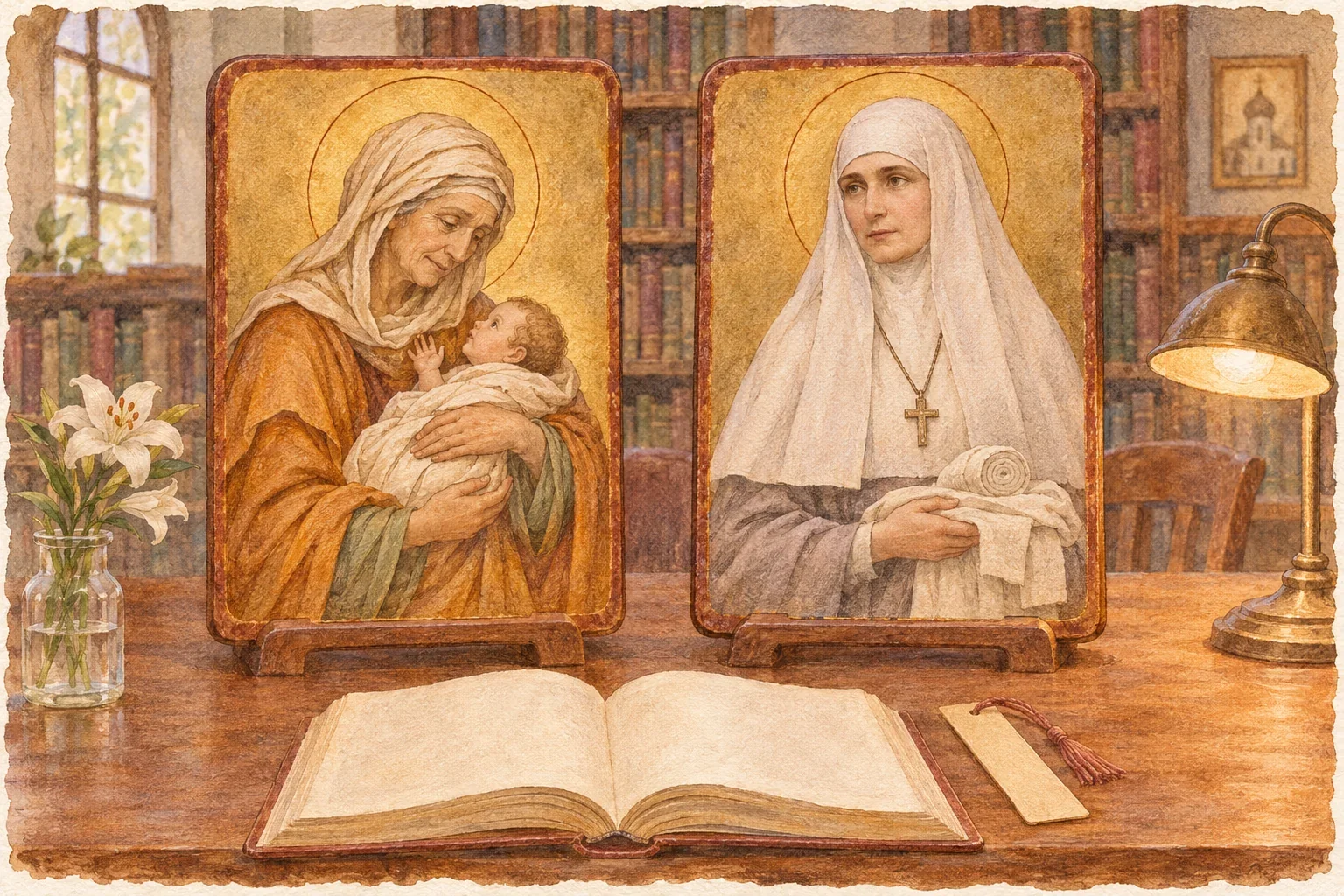
Saints named Elizabeth include righteous Elizabeth, mother of John the Baptist, and the royal martyr Grand Duchess Elizabeth Feodorovna. They belong to different periods and have different lives. A date found by name alone does not establish your patron saint.
Luke’s opening chapter describes the Baptist’s mother. The Grand Duchess is associated with works of mercy and the Martha and Mary community in Moscow. Check the full designation so that information from one life is not transferred to another.
The Russian forms Elizaveta and Elisaveta occur in different editions. Spelling variation does not always indicate a different saint. Equally, a shared first name is insufficient: designation, place and circumstances matter.
Consult baptismal records and ask relatives who were present. If the information is lost, discuss it with the parish. When choosing a gift, identify the saint beforehand instead of selecting the first attractive icon.
Righteous Elizabeth in the Gospel of Luke
The first distinction is between the Gospel’s righteous Elizabeth, mother of John the Baptist, and saints of later centuries. Her story appears in Luke chapter one. Elizabeth and her husband, the priest Zechariah, are presented as faithful to God; their lack of children is not described as evidence of moral inferiority. In old age they are promised a son.
John is to prepare people for the coming of the Lord. His parents’ story therefore belongs to the opening Gospel account of salvation, rather than only to a narrative of private family happiness. Reading it should not lead to promising every childless couple a literal repetition of the event. The biblical narrative describes a particular divine action while recognising the dignity of people whose lives have involved a prolonged period of waiting.
The meeting of Elizabeth and the Virgin Mary
After the Annunciation, Mary visits Elizabeth. Their meeting is an important part of the Gospel narrative: the unborn John is connected with recognition of Christ’s coming, and Elizabeth’s words disclose the significance of the Lord’s mother. This episode appears in church art and explains why righteous Elizabeth is often depicted alongside the Virgin Mary.
When reading, distinguish the characters and the sequence: Zechariah serves in the Temple, Mary receives the announcement, and she subsequently visits her relative. Combining these events into an indistinct story about a holy mother loses much of the account’s meaning. A beginner can read the whole chapter and notice who speaks, to whom and at what point, rather than extracting a single sentence to confirm a conclusion already reached.
The venerable martyr Elizabeth Feodorovna
Elizabeth Feodorovna is a different saint who lived around the turn of the twentieth century. The grand duchess devoted herself to serving sick and disadvantaged people. She is especially associated with the Martha and Mary Convent of Mercy that she founded in Moscow, where prayer and practical assistance were brought together. She should not be identified with John the Baptist’s mother simply because they share a name.
In 1918 Elizabeth Feodorovna was killed near Alapayevsk with other prisoners, and the Church honours her as a venerable martyr. This belongs to modern history, for which photographs, letters and testimony from contemporaries survive. Learning about her need not stop at a brief calendar entry. Biographies, documents and the history of the convent help readers understand the concrete forms that her charitable work took.
Identifying your own patron saint
Begin with the baptism certificate and what the family actually remembers. A full designation may include righteous, venerable martyr or another description that immediately distinguishes the saints. A record containing only Elizabeth may not settle the question. An icon received in childhood can be a useful clue, but does not by itself prove that the saint depicted was the intended baptismal patron.
If information has been lost, discuss the matter calmly with the parish and explain what is reliably known. There is no need to invent a family story retrospectively or select a different patron whenever a nearer calendar date appears. Clarification aims to establish a meaningful connection with a particular life and commemoration. It does not prevent prayer to other saints: having a patron is not a prohibition on seeking anyone else’s intercession.
Choosing an icon and reading by name
When choosing a gift, establish not only the recipient’s everyday name but also the saint they honour as their patron. Righteous Elizabeth appears in Gospel compositions; Elizabeth Feodorovna is identified by her full designation and imagery associated with her ministry. Clothing and apparent age can help, but an inscription is more dependable than a general visual impression.
If you want to learn about both saints, follow two distinct reading paths. For the Baptist’s mother, begin with Luke and then turn to church tradition. For Elizabeth Feodorovna, start with a reliable biography and the history of the Martha and Mary Convent. A shared name can then introduce different forms of holiness: faithfulness in waiting, recognition of the Gospel’s fulfilment and practical mercy within difficult social circumstances.
A question for reflection
What information distinguishes your patron from saints who share her name?