
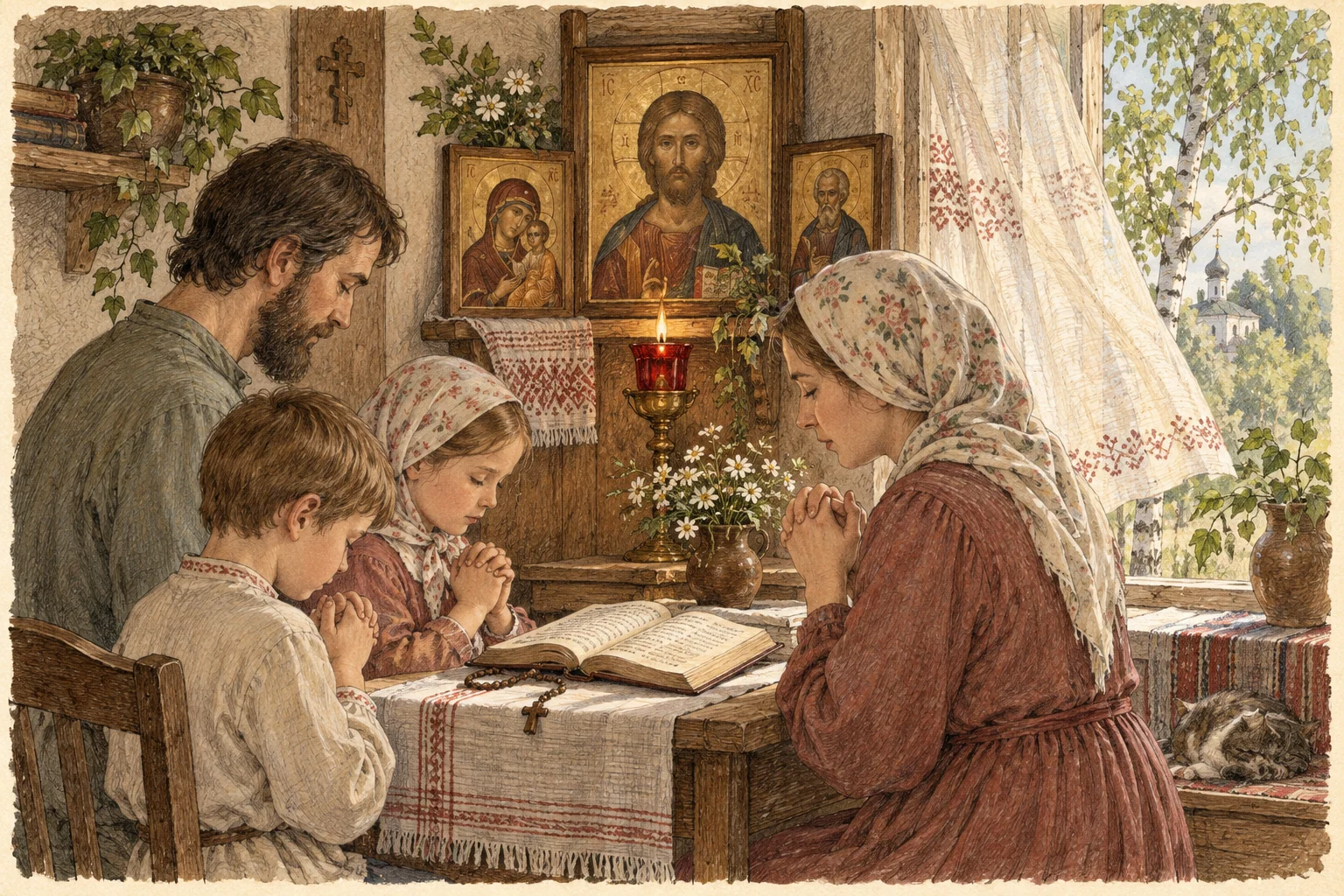
“O Heavenly King” is addressed to the Holy Spirit. It opens many church services and prayers at home. We ask for cleansing and life with God, not only help with a particular task.
The prayer
O Heavenly King, Comforter, Spirit of truth, who are everywhere and fill all things, Treasury of good things and Giver of life, come and dwell in us, cleanse us from every impurity, and save our souls, O Good One.
This is an explanatory rendering of the Church Slavonic text. English parish prayer books may differ slightly.
Who is the Heavenly King?
The words “Spirit of truth” identify the One addressed: the Holy Spirit, a Person of the Trinity, not an impersonal energy or emotional state.
Understanding the requests
“Fill all things” does not mean “fulfil every wish”. “Treasury of good things” speaks of the source of what is good, while “Giver of life” names divine generosity. Cleansing concerns freedom from sin; the body and material life are not intrinsically dirty.
Why ask God to come?
God’s presence and our willingness to receive Him are not identical. Asking the Spirit to dwell in us expresses a desire to live with God rather than remain closed within our habits. That desire involves conduct, not words alone.
The Paschal season
In the usual Paschal order, the troparion “Christ is risen” replaces this prayer from Pascha until Ascension. Between Ascension and Pentecost, “O Heavenly King” is omitted. Its return belongs to the celebration of the coming of the Holy Spirit. Bright Week also has a distinctive order of prayer, so consult your prayer book’s complete seasonal directions.
If you make a calendar mistake
The directions help us pray within the Church’s year. They are not magical rules that make an accidental reading dangerous. Learn the order and continue. The church calendar gives the day’s commemoration; actual service times for our parish are listed separately in the schedule.
Comfort is more than a pleasant feeling
The linked explanation of “Comforter” includes help and protection. Do not measure the prayer only by whether you feel better afterwards. You may remain tired while asking for strength to speak truthfully, avoid pushing someone away, or complete a responsibility. The absence of immediate relief does not make the address meaningless. We ask for life with God rather than order a particular emotional experience, and that distinction leaves room for honest prayer on a difficult day.
Truth instead of convenient justification
Addressing the Spirit of truth can involve willingness to examine your own decision honestly. Before a conversation, distinguish facts from assumptions; before making a promise, acknowledge what you can actually do. Do not then declare every opinion formed after prayer to be God's will. Confidence and strong feeling do not make a judgement infallible. Difficult questions still require verification, listening to another side, and advice from someone competent to address them.
This matters in family life and parish work when one participant believes a spiritual impression should settle a disagreement for everyone. Prayer gives no right to bypass consent, break agreements, or demand obedience to a personal plan. Asking for truth begins with the worshipper's own willingness to turn from falsehood even when it seems advantageous. It does not confer authority over another person's conscience.
“In us” and life with other people
The plural deserves attention in such a short text. Cleansing can be sought not merely as relief from a private difficulty but as help in shared life. At work, that might mean stopping a rumour; at home, resisting the habit of answering a question irritably. Do not expect the prayer automatically to correct everybody involved. Begin with the part of the relationship for which you are responsible, respecting another person's freedom while remaining honest about necessary boundaries.
Cleansing and human dignity
The request to be cleansed from impurity must not become disgust toward your body or your origins. Nobody should be labelled unclean because of illness, appearance, or abuse they have suffered. The petition concerns freedom from sin, not excluding inconvenient people from human company. If a word evokes painful associations, study its meaning separately rather than forcing yourself to imagine frightening scenes. A careful explanation can remove a misunderstanding without changing the received prayer.
Understanding a seasonal direction
A seasonal note in a prayer book concerns a particular place in the order. Read it completely: which text changes, for what period, and what replaces it. Because the date of Pascha changes, last year's note may no longer help. Consult the calendar for the relevant year and the practice of your parish. This is not a reason to fear a mistake every day. One clear note or bookmark is usually more useful than repeatedly checking before each reading.
When learning the prayer, distinguish its addresses from its petitions. The opening names the One addressed; the ending asks him to come, cleanse, and save. Read both parts together so the opening does not become an abstract vocabulary list. Understanding can develop gradually: begin with the main address and explore difficult expressions one at a time, instead of postponing prayer until you have completed an extensive course of study.
Text reference
Azbyka: traditional prayer text (Russian)