
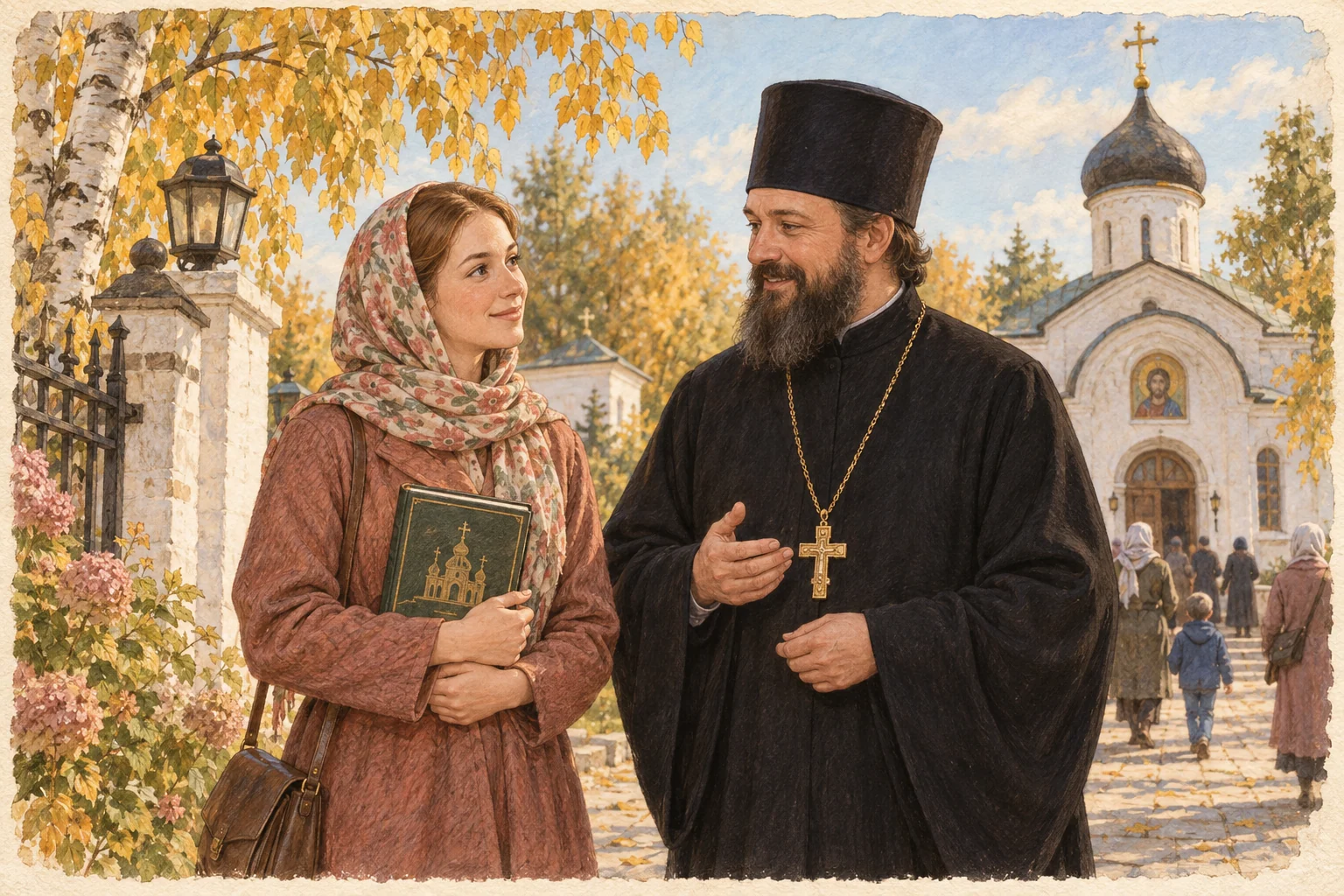
The Church year begins on September 1 in the ecclesiastical calendar. In Russian practice, which follows the Julian calendar for fixed feasts, this corresponds to civil September 14. The day marks the beginning of the annual liturgical cycle. It does not demand replacing the civil New Year or declaring academic, financial, and other calendars illegitimate.
Why September?
The tradition is connected with Byzantine history and the system of indictions. An indiction originally belonged to administrative and tax reckoning organised into fifteen-year periods. Church life received this calendar boundary and gave it prayerful significance. There is no need to explain the September beginning exclusively through nature or supposed magical properties of the season.
Historical explanations of the calendar's development differ in detail. A story in which one person suddenly invented the whole Church year is generally too simple. Distinguish a civil arrangement, its liturgical use, and later spiritual interpretation. A single term can preserve several stages of history that cannot be collapsed into one date.
Understanding September 1/14
The double date means one day expressed in two calendars, not a fortnight-long celebration. In the twentieth and twenty-first centuries, Julian September 1 corresponds to Gregorian September 14. Orthodox communities using the new calendar for fixed feasts observe the beginning on civil September 1. Orthodox life includes more than one calendar practice.
Do not mechanically add thirteen days to every date in ancient history: the difference between calendars has changed. For a modern parish schedule, identify the calendar used by that community. Historical research additionally requires attention to the century and the author's dating convention. These are different tasks, although both begin by reading a date carefully.
The Church's Prayer
The New Year's prayer places time before God, asking for blessing, peace, and help to live through the coming year. A Gospel scene associated with the observance is Christ reading Isaiah's prophecy in the Nazareth synagogue and proclaiming the acceptable year of the Lord (Luke 4:16–22). The Gospel itself does not supply a civil date for that event.
Older religious language about a favourable “year” concerns a period of God's saving action, not merely a season's weather. Prayer does not promise that beginning September correctly will prevent every loss. It expresses trust amid an unknown future. Divination from weather, an accidental encounter, or the first words heard that morning does not belong to this observance.
Entering the Liturgical Cycle
Begin with a few anchors rather than attempting to memorise an entire calendar: the Sunday Liturgy, the next major feast, and an achievable time for daily prayer. Consult the parish schedule and choose a realistic rhythm. The annual cycle allows repeated encounters with the central events of faith, deepening understanding rather than collecting attendance marks.
Give thanks for what has passed and name honestly something that needs attention: an unresolved conversation, a debt, a forgotten promise, or a neglected relationship. One feasible action is better than an impressive list that becomes discouraging after a week. September does not erase the past automatically. It offers an opportunity to use the time given more faithfully, holding remembrance, hope, and responsibility for the present day together.
A household note may contain three lines: what I am grateful for, whom I want to care for, and what I can begin now. It is not a vow or a reason to fear punishment for an unfinished item; it supports attention, not perfection.
The Year's Beginning and Its Centre Are Different
The September boundary does not mean every church date is calculated from it. The catechetical explanation of the Church year linked below identifies Pascha as the centre of annual worship. Fixed dates exist alongside celebrations belonging to the Paschal cycle. A new Church year therefore does not move Pascha into autumn or restart its calculation from September.
This distinction is useful for a beginner. First identify a feast attached to a particular calendar date, then one that moves with Pascha. Do not attempt to explain every detail with a single formula. If an app and a parish website give different civil dates, check the year and the calendar used before concluding that a community has forgotten a feast. Reading the full entry is often more useful than comparing two numbers without their context.
Why Return to Events We Already Know?
Annual repetition can seem uneventful if we expect a calendar only to supply new information. But a familiar text is heard within changing circumstances. After a child's birth, reconciliation, or bereavement, words once overlooked may become particularly noticeable. That does not mean every personal association should be declared the only correct interpretation of a feast.
Keep a brief note of questions raised by a reading and return to it the following year. This is not a record of spiritual scores. It can show what has become clearer and what still needs conversation or study. If repetition does not produce strong emotion, an unusual practice is not necessarily the answer. Attentive participation in a familiar service can have substance without a sense of novelty, and understanding need not arrive at the same pace as feeling.
A Plan That Allows for Changed Circumstances
When choosing a rhythm for the year, consider illness, travel, or additional family care as well as an ideal week. Decide, for example, how a short prayer might remain possible when its usual time is unavailable. This is neither an attempt to foresee everything nor permission to neglect promises. It acknowledges honestly that a human plan has limits.
After a month, review the arrangement with anyone it affects. Has a new commitment unexpectedly increased the burden on relatives? Do responsibilities need to be shared differently? The Church New Year can help us order our lives, but it should not become a reason to expect everyone else to serve our religious intentions without being consulted. Revising an unrealistic plan can be more responsible than defending it simply because it sounded admirable at the beginning.
Sources
- OCA: Church New Year
- Azbuka Very: historical introduction to the church year (Russian)
- OCA: the structure of the Church year