
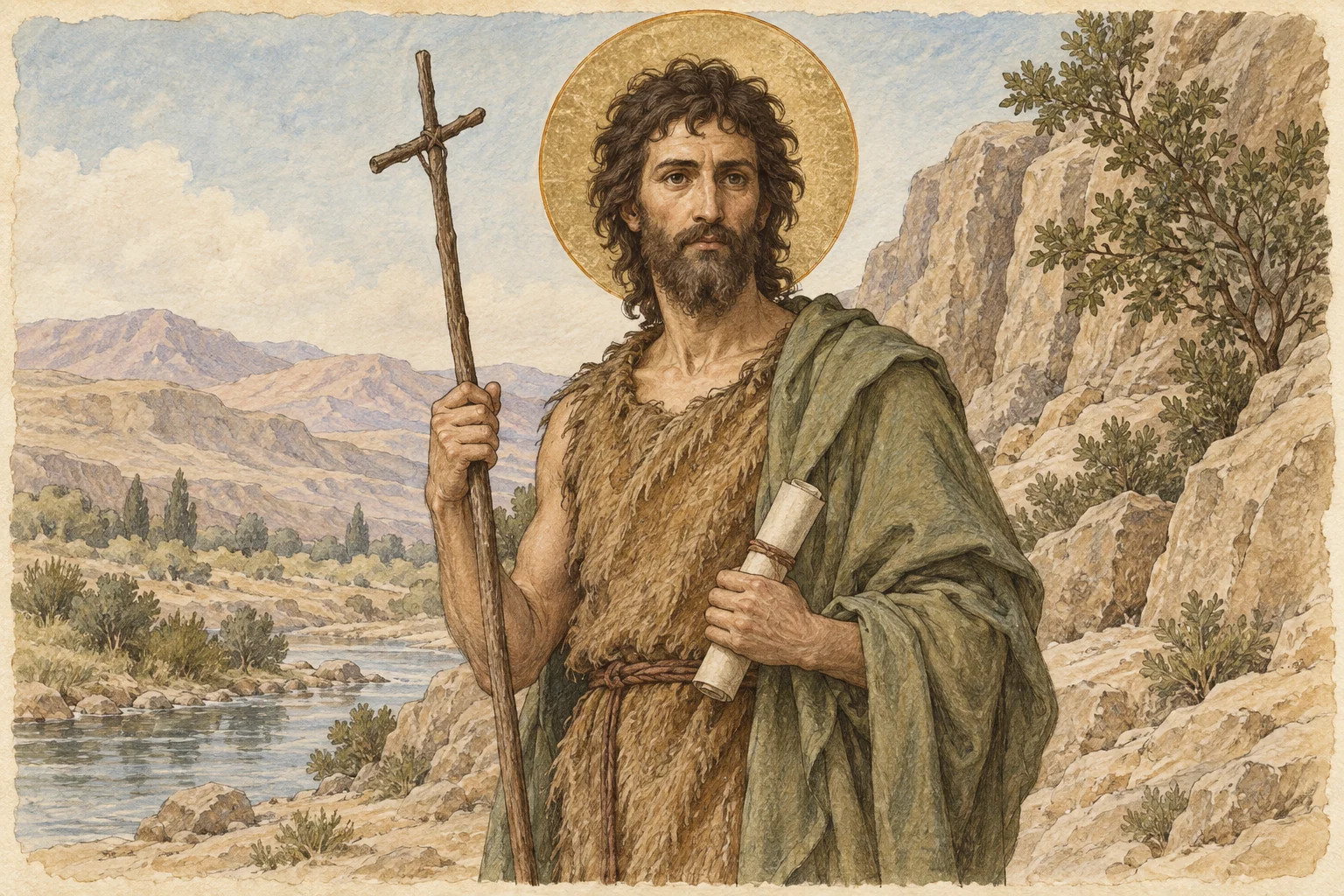
Russian churches following the Julian calendar commemorate the Beheading of John the Baptist on civil September 11, corresponding to Julian August 29. The day remembers a prophet's violent death and fidelity to truth, not delight in another person's pain. It is kept with fasting, whose purpose should not be replaced by rules about the shapes of household objects.
The Gospel Event
The accounts appear in Mark 6:14–29 and Matthew 14:1–12. John condemned Herod's unlawful union with Herodias and was imprisoned. During a banquet the ruler made a reckless promise to Herodias's daughter. Following her mother's advice, she demanded John's head. Herod complied rather than withdraw his public words. John's disciples subsequently took his body and buried it.
The Gospel depicts a succession of human decisions, not an unavoidable fate: resentment, vanity, fear of embarrassment, and refusal to stop. The narrative therefore concerns more than cruelty at an ancient court. It asks whether someone can acknowledge an evil promise and refuse to carry it out, even at the cost of losing face before others.
The Meaning of Fasting
The fast expresses the gravity of the commemoration and contrasts restraint with the banquet where a righteous man's death was ordered. Christians do not reproduce John's suffering or punish their bodies in his memory. Dietary restraint should accompany care with speech, rejection of cruelty, and help for those who struggle to defend themselves.
Someone with illness, pregnancy, age-related needs, or other particular circumstances should discuss an appropriate observance with a priest while taking medical recommendations seriously. A calendar is not an individual assessment. There is no need to conceal weakness or reject necessary food in order to match the strictest possible description of a monastic rule.
Knives and Round Foods
Prohibitions against knives, round plates, apples, or cabbages belong to popular customs and superstitious interpretations of the narrative, not to obligatory Orthodox fasting. A food's shape does not make it sinful. Respect for John is not measured by whether bread is sliced or broken by hand.
If an older relative follows such a custom, mockery need not become the day's first response. Explain calmly the difference between a family habit and a requirement of the Church. In particular, avoid frightening children with claims that using a kitchen utensil will bring punishment or reproduce Herod's crime.
A Concrete Response
Read the Gospel passage and notice the motives of its participants. Then consider circumstances in which fear of other people's judgement makes honesty difficult. A response may involve refusing to join in bullying, correcting a slander, or admitting a wrong decision to someone affected by it.
Participation in worship and prayer for victims of violence fit the day's meaning. Yet John's story does not authorise self-appointed campaigns against other people's private lives. A prophet's rebuke cannot be converted into permission for humiliation or threats. His steadfastness invites fidelity to God and truth, not enjoyment of someone else's punishment. Keeping that distinction allows fasting to become a serious examination of one's own conduct rather than an exercise in condemning neighbours.
A household can agree on a simple fasting meal beforehand, avoiding a dispute over the menu. Use the time for reading, a calm conversation, or practical help rather than inspecting what other people have on their plates.
Why Herod's Regret Was Not Enough
Mark does not portray Herod as entirely unaware of the person he is destroying. The account describes his attitude towards John and his distress at the demand made by Herodias's daughter. Yet that feeling does not prevent the order. The distinction matters: inward discomfort has not yet become a refusal to do wrong. While reading, identify the ruler's emotion separately from the action he ultimately chooses.
An everyday version of the question arises when someone has agreed to share a humiliating recording or support an allegation they know is false. Withdrawing feels embarrassing because it means admitting an error before friends. But embarrassment at changing a decision does not make continued harm a form of keeping one's word. We can say that agreeing was wrong and decline further involvement. This is an example for reflection, not an equation between an ordinary disagreement and the killing described in the Gospel.
Talking With a Child About a Frightening Event
It is enough to explain that the prophet told the truth, was unjustly killed, and is remembered by the Church for his faithfulness. Graphic details and disturbing images are not tests of a child's seriousness. Answer questions in accessible language without adding details the child has not requested. Avoid leaving the impression that God enjoys cruelty or that every courageous action necessarily ends in death. The person remembered should not disappear behind the frightening manner of his death.
With a teenager, discuss the pressure of an audience: why can stopping be harder in a group than in a private conversation? What words might help someone leave a harmful plan? An adult can describe a decision they themselves corrected instead of merely demanding courage from a younger person. The discussion concerns the responsibility of those acting; it must not blame a victim for being unable to secure their own protection.
Examining Our Own Speech
Consider one familiar habit on this day: do I call a remark a rebuke when I really want it to hurt? A truthful correction requires knowledge of the circumstances and concern for its effect. Public humiliation often does little more than gather spectators around a conflict. When harm must be reported, choose a responsible recipient and give accurate facts. Honouring the Forerunner's steadfastness does not remove the need to examine our words, nor make everyone who feels certain of their position incapable of error.
Sources
- Mark, chapter 6, Russian Synodal translation
- OCA: the Beheading of John the Baptist
- OCA: fasting seasons and days