
The Great Schema concerns a particular monastic tonsure and a deepened expression of ascetic vocation. It is not a degree of priesthood or a promise of extraordinary powers. Understand monastic stages and tonsure within the community’s church tradition.
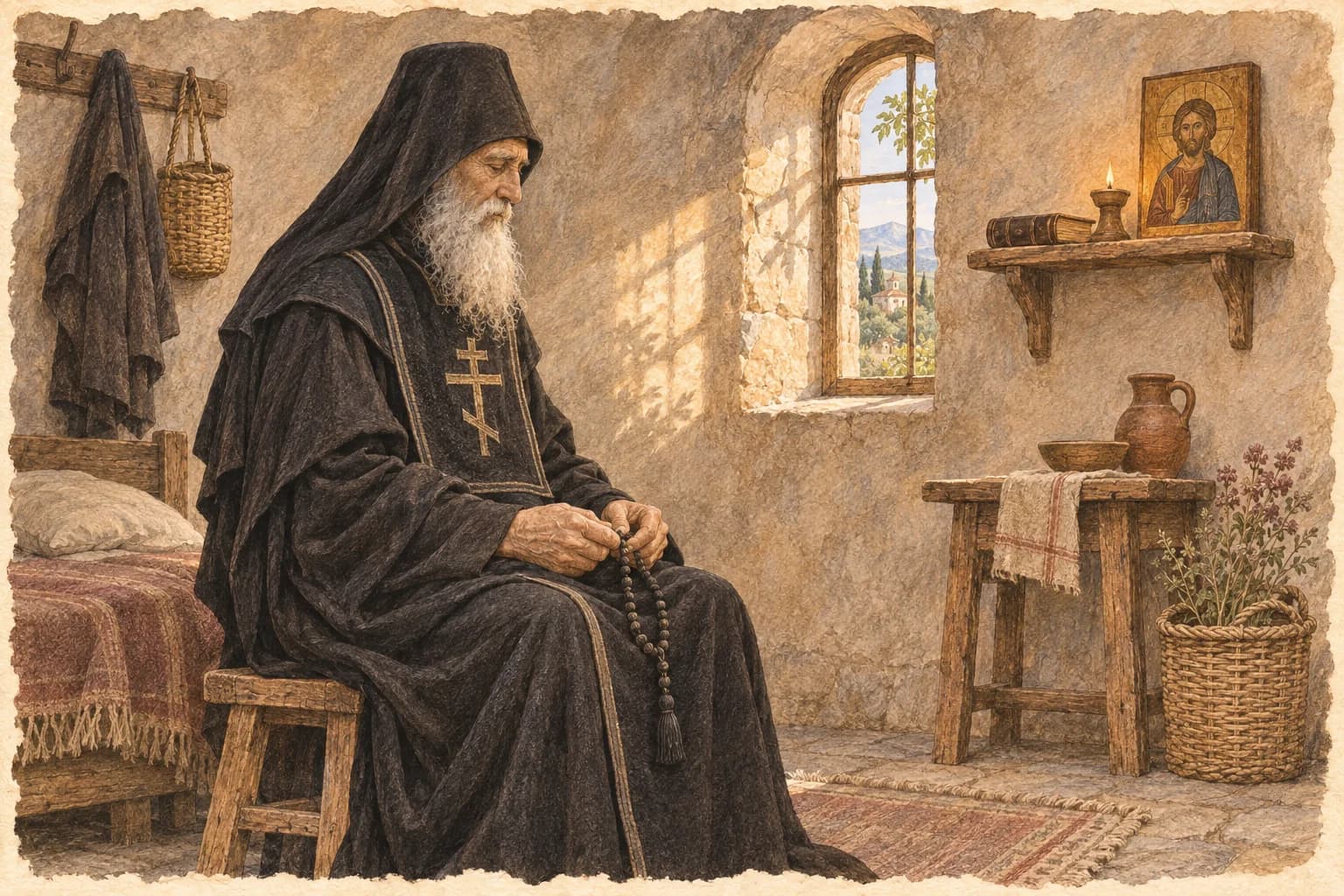
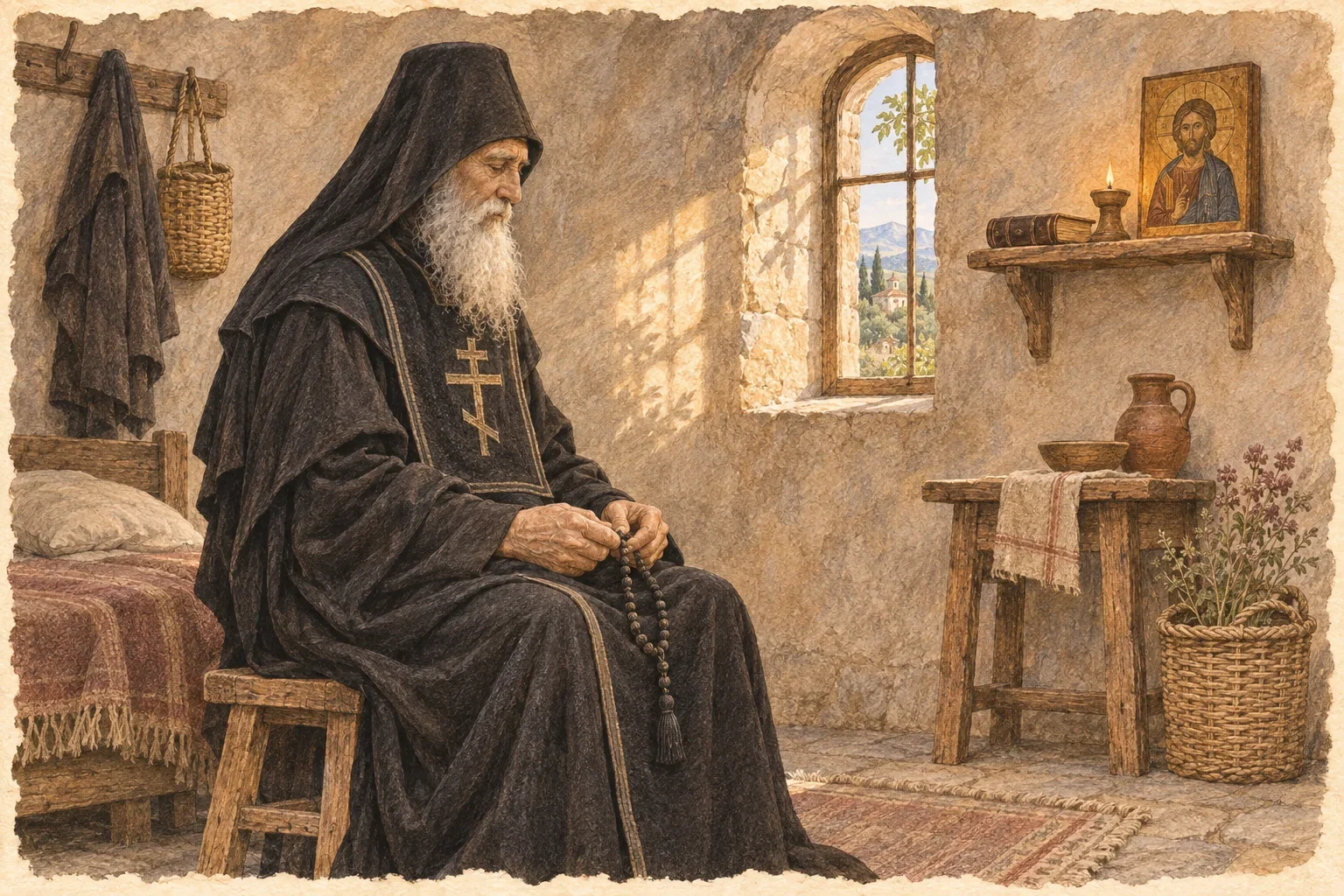
The clothing includes symbolic imagery recalling vows. Its appearance witnesses to a vocation rather than a theatrical effect. A photograph cannot reveal a person’s entire spiritual experience.
Do not seek a schema-monk merely for predictions or a supposedly most powerful blessing. An austere vocation does not turn every piece of advice into a universal order for families. A layperson need not copy another person’s routine.
If interested in monasticism, begin with the vows and obedience. Observe the monastery’s arrangements when visiting a particular person. Respect includes accepting that conversation, photographs or special attention may not be available.
What changes with the Great Schema
The Great Schema is associated with a deepening of monastic dedication. It concerns following Christ in prayer, repentance and fidelity to the vows, rather than acquiring a different human nature. Receiving the schema does not make a person incapable of error or remove the need for personal spiritual work. On the contrary, its ecclesial meaning involves taking the responsibility of the vocation with particular seriousness.
Russian tradition commonly distinguishes the rassophore, the Lesser Schema and the Great Schema, but terminology and the sequence of stages are not identical in every Orthodox monastery. A popular chart of stages should therefore not be turned into a compulsory instruction for every community. When reading about Greek, Russian or Athonite monastics, consider the period and local tradition: similar words can describe somewhat different practices.
Why the schema is recognised by distinctive clothing
In photographs, a monk of the Great Schema is often recognised by the analavos bearing crosses and other signs of monastic dedication. This clothing recalls the accepted vocation and the bearing of the cross. It is neither theatrical costume nor a personal achievement award. Details of the garments and their names should be explained within the Church’s tradition, rather than presented as a collection of secret protective symbols.
A photograph cannot establish someone’s spiritual condition. Distinctive clothing does not prove clairvoyance, healing powers or authority to issue binding directions to every visitor. If an image is used to advertise a miraculous product, a paid prediction or guaranteed assistance, its monastic symbolism does not substantiate those promises. The garments acquire meaning through the vows and church life, not through commercial use of a photograph.
Schema monk and schema priest-monk
In ordinary conversation, a schema monk means a monastic who has received the schema. Additional elements in a title indicate whether the person is ordained. A schema monk is a monk; a schema hieromonk is also a priest. Receiving the Great Schema is not itself ordination and does not confer authority to celebrate the Liturgy or hear sacramental confession. If someone was not a priest beforehand, the new garments do not change that fact.
This distinction matters to monastery visitors. Confession is sought from a priest entrusted with that ministry, while conversation with an experienced monk may have a different character. Respect for the speaker does not turn every piece of spiritual advice into a sacrament. Establish whom you hope to meet, what ministry he exercises and whether he receives visitors. That prevents expectations disconnected from the community’s actual life.
What a schema monk’s life can teach a reader
Lives of schema monastics often describe concentrated prayer, patience in illness, reconciliation and voluntary restraint of personal desires. A lay reader can learn from those directions of spiritual work. Copying another person’s monastic timetable without regard to family, employment or health is generally not required. Someone’s ascetic struggle cannot be detached from their life and transferred to another person as a ready-made list of household practices.
There is no universal rule that the Great Schema is received only immediately before death, nor any promised lifespan after tonsure. Biographical circumstances differ. Notice how the person lived before this step and the place they occupied within their community. The schema then becomes more intelligible as a particular expression of monastic vocation, connected with the Church and responsibility towards others, rather than appearing as a mysterious final rite.
Can someone plan their own route to the schema?
Someone interested in monasticism may immediately ask how many years in a monastery are required before receiving the Great Schema. There is no universal period after which a person acquires the right to demand tonsure. Monastic life is not organised like a diploma programme completed after a fixed number of semesters. Vocation, stability of intention, relationships within the community and ecclesiastical discernment matter, rather than calendar seniority alone.
Imagine a young visitor who reads the life of a well-known schema monk and decides to reproduce his path. A useful first step is becoming acquainted with an ordinary monastery timetable: shared prayer, work, yielding to others and responsibility for assigned tasks. That everyday reality reveals the vocation more clearly than interest in future garments. If someone discovers that monastic life is not their calling, admitting it honestly is not defeat. Christian life within a family and parish also requires fidelity and responsibility. The Great Schema is not the universal destination of every believer, nor does it diminish the dignity of other forms of Christian vocation.
A question for reflection
What are you learning about monastic responsibility beyond distinctive clothing?