
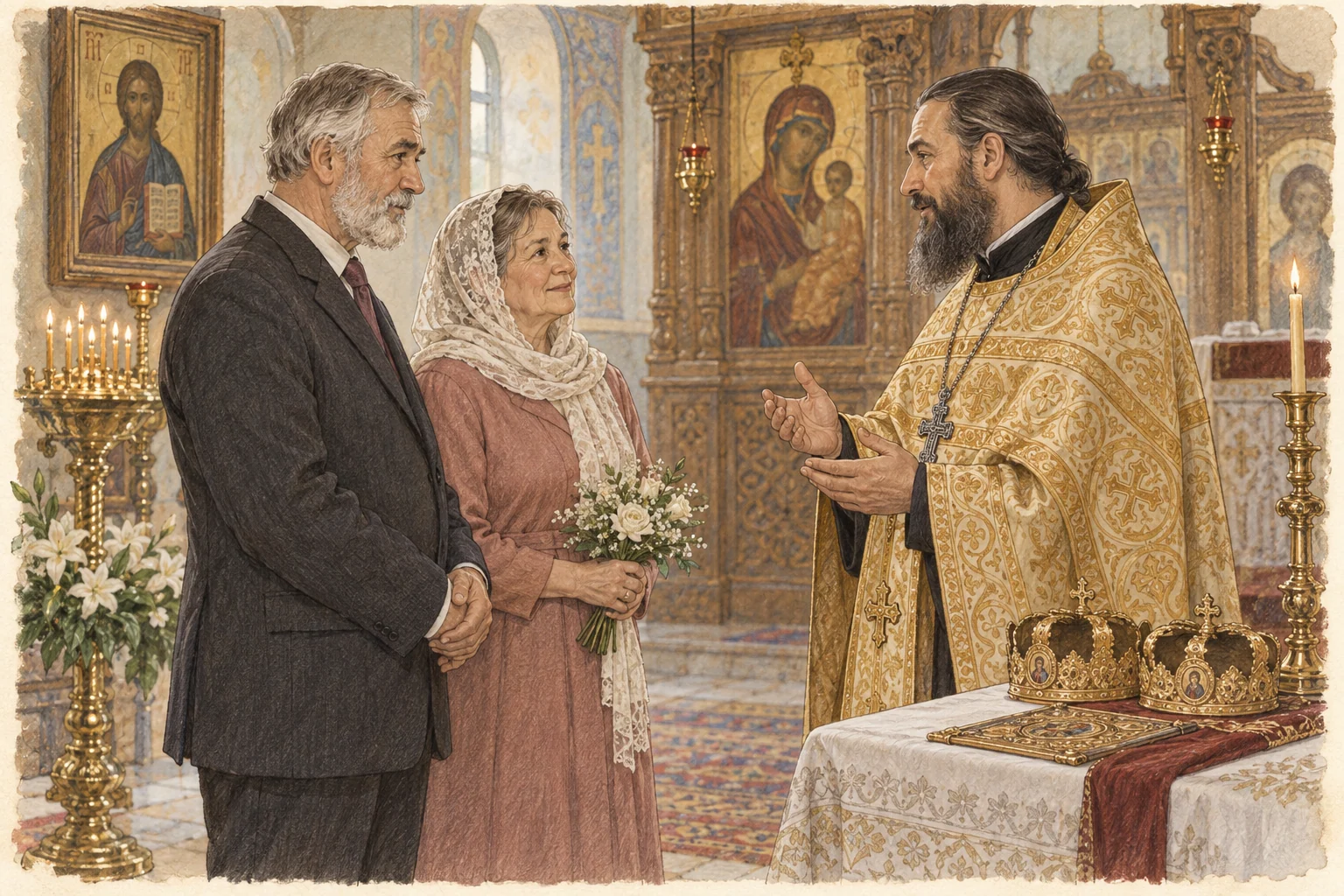
A church wedding is not only for newlyweds. Some spouses begin practising their faith after raising children, retiring, or sharing many years of work. Preparation then concerns an existing family: its gratitude, accumulated difficulties, and shared desire to live before God. Recreating all the outward arrangements of a first wedding is unnecessary.
Do Not Dismiss the Years Already Shared
The Russian Orthodox Church's Social Concept warns against equating a registered marriage without a church wedding with fornication. Here registered marriage means a marriage formally recognised by the state, not any shared household. Couples need not declare their earlier family life meaningless before approaching the sacrament. They can offer thanks for fidelity already sustained and seek God's blessing on the way ahead.
A church wedding is nevertheless neither a reward for longevity nor simply an attractive anniversary celebration. Discuss what the step means to each of you. One spouse may seek fuller church participation while the other fears being required to perform someone else's faith. Have that conversation before inviting guests or arranging a photographer.
A Free Decision by Both Spouses
Pressure from children, relatives, or the more religious spouse cannot replace personal consent. If one person is not ready, patient discussion and respectful communication are more useful than setting a date as a settled matter. The wedding must not become a way of forcing change or testing love through compliance with a religious demand.
Name expectations the sacrament will not automatically fulfil: ending longstanding arguments, treating an addiction, or restoring trust after betrayal. These require their own responsible work. Where threats or abuse are present, safety comes first. A solemn service cannot make dangerous relationships safe without a change in conduct.
What to Discuss With the Priest
At an initial meeting, explain how long you have been married, whether both spouses are baptised, whether either had a previous marriage, and whether a church wedding has already taken place. Do not conceal circumstances for fear of spoiling the occasion. Addressing them beforehand is calmer than discovering a difficulty at the service. Ask which documents and preparation conversations the parish needs rather than importing another couple's checklist.
The Russian Church has approved a particular marriage rite for older spouses. Discuss its use with the priest rather than deciding eligibility from a number of years alone. Mention difficulties with standing, hearing, mobility, or the need for assistance. Ask how participation can accommodate your strength. Preparation for confession and Communion should also be discussed personally rather than imposing demanding rules on each other.
The Wedding Day and the Day After
A modest gathering can support prayerful attention. Agree on timing, photography, seating where needed, and transport. Adult children can assist with arrangements without becoming supervisors of their parents' consciences. There is no need to spend money required for essential family needs to match an imagined standard of celebration.
Afterwards, choose one shared continuation: reading a short Gospel passage, thanking God for the day, or regularly discussing family responsibilities without accusations. Do not turn this new stage into monitoring your spouse's spiritual performance. An established family brings a real history to the sacrament. Continuing faithfulness takes shape in the way spouses care for each other through ordinary life.
Talking About Your Shared History Without Testing Each Other
Before meeting the priest, each spouse might consider three questions: what am I grateful to my partner for, what is difficult to discuss, and where could I become more dependable? Share only what you are ready to share. This is not a private confession to one another. Neither spouse should demand a catalogue of mistakes or disclosures under threat of cancelling the wedding. The aim is to recognise that asking for God's help concerns your actual life, not just the celebration.
Retirement, for example, may mean spending most of the day together for the first time, with disagreements about habits, money, or caring for grandchildren. Preparation offers an opportunity to name these difficulties without declaring the marriage a failure. Agree on one practical change, such as discussing substantial expenses beforehand or not promising relatives help on both partners' behalf. This does not replace the sacrament; it helps avoid expecting unspoken difficulties to resolve themselves during the service.
Accepting Help From Adult Children
Distinguish practical assistance from personal decisions. Children can check for steps at the entrance, help locate documents, and arrange transport. Whenever possible, the spouses themselves should answer questions about faith, consent, and their marriage. If a parent has difficulty hearing, a companion can assist communication without answering every question for them. Allow some quiet time with the priest even when relatives are very attentive and supportive.
Do not measure your wedding against photographs of someone else's anniversary celebration. Decide whom you genuinely want present, how long you can comfortably remain at church, and whether a meal afterwards would be welcome. If illness changes the plans, tell the priest and guests rather than preserving the timetable at any cost. Discuss flexibility before spending money: knowing which arrangements can be changed reduces pressure on both spouses and leaves room to prepare honestly.
Sources
- Russian Orthodox Church Social Concept, Section X (Russian)
- Report on the Approved Marriage Rite for Older Couples (Russian)