
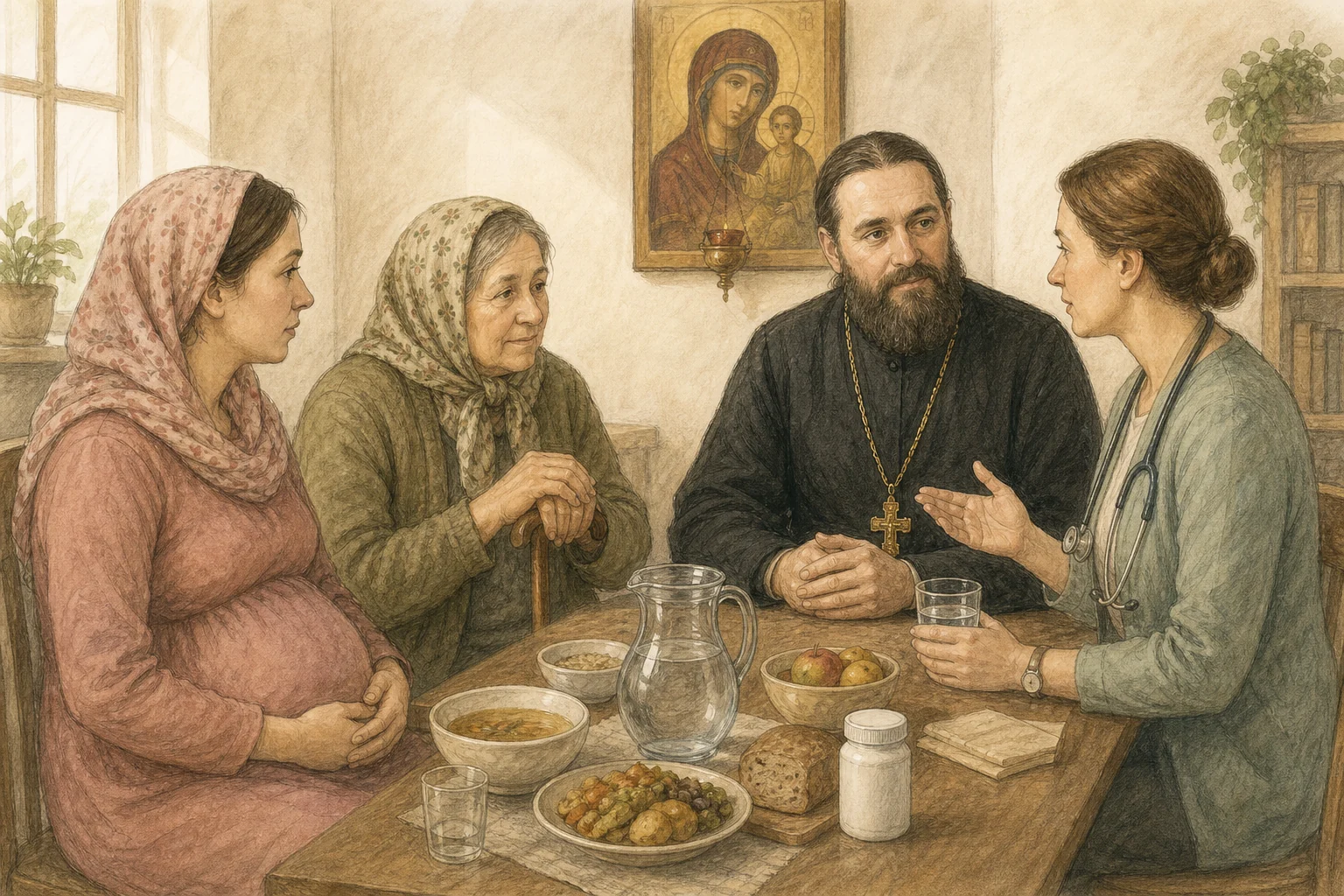
During illness, pregnancy, nursing, and medical treatment, the food rule of fasting must be adapted so that prescribed medicine, therapeutic nutrition, protein, and necessary energy are not withdrawn. The measure should reflect medical advice and be discussed with a priest. A health-related dispensation is not abandonment of the fast.
A general internet chart does not know a diagnosis, laboratory results, or drug interactions. This article prepares a conversation; it does not replace a medical prescription or an individual pastoral decision.
The first principle is to avoid harm
Christian restraint should support prayer and love, not cause fainting, decompensation of disease, loss of pregnancy, or failure of treatment. Care for life and the body is not opposed to faith.
If a physician has prescribed a particular diet, regular meals, or medicine with food, follow that order until a safe alternative has been agreed. Do not conduct a private experiment.
The physician and priest have different responsibilities
A physician evaluates diagnosis, risk, nutrition, and medication. A priest helps select a spiritual measure and interpret church practice. A sound decision joins both kinds of competence without asking either person to impersonate the other.
Tell the physician what foods you plan to remove and for how long. Tell the priest about the medical restriction without feeling required to disclose every private detail publicly.
Signs that require immediate care
Loss of consciousness, confusion, severe weakness, chest pain, difficulty breathing, bleeding, signs of a serious allergic reaction, acute diabetic deterioration, or dehydration require urgent medical help. Do not wait for permission from a parish.
After the person is stable, the spiritual form of the fast can be reconsidered. Emergency treatment is not a failure.
Do not stop medication because of ingredients
Take prescribed tablets, insulin, inhalers, hormones, and other medicine according to schedule. A gelatin capsule, lactose used as an excipient, or alcohol in medicinal drops does not turn treatment into culinary indulgence.
If an equivalent formulation exists, ask a pharmacist and physician, but do not change the dose or product on your own. Fasting seeks freedom from passions, not danger caused by a capsule.
Diabetes and blood-sugar disorders
Changes in carbohydrates, meal timing, and activity can alter glucose and medication requirements. The treating team should design nutrition for diabetes. Some familiar fasting foods contain many rapid carbohydrates and insufficient protein.
Regular monitoring and treatment take priority over a strict calendar menu. The spiritual measure may move toward simplicity, abstinence from treats, prayer, and help for another person.
Gastrointestinal, liver, and kidney disease
Legumes, mushrooms, large amounts of raw fiber, and nuts are not suitable for everyone. Disease of the digestive tract, liver, gallbladder, or kidneys requires an individual diet that may include animal products.
Do not call therapeutic food a luxury. Eat what is necessary without display and without defending yourself to everyone at the table.
Anemia, low weight, and recovery
Anemia, low body weight, recovery after surgery, and infection may increase the need for protein, iron, and energy. Abrupt restriction can delay healing.
Follow the clinical plan and return to a stricter measure only after medical review. Recovery itself can be lived with gratitude and patience.
Cancer treatment and serious chronic disease
Chemotherapy, radiotherapy, and severe chronic conditions can change appetite, taste, and food tolerance. The priority is sufficient nourishment and completion of treatment.
At times a person can tolerate only a few foods. Do not narrow that list for external severity. The fast may consist in refusing anger, keeping prayer according to strength, and attending to another patient.
Eating disorders
In anorexia, bulimia, binge-eating disorder, and compulsive ingredient control, food restrictions may intensify illness. Seek a clinician experienced in eating disorders and a priest willing to support the treatment plan.
Spiritual discipline may mean eating regular sufficient meals despite anxiety rather than adding another prohibition. Do not use religious language to conceal symptoms.
Pregnancy
A pregnant woman needs adequate energy, protein, iron, calcium, and other nutrients according to individual medical advice. Nausea and intolerance of smells may further restrict available food.
Eat what can be safely tolerated and what the clinician recommends. Fasting may take the form of simplicity, prayer for the child, reduced informational noise, and mercy, never unnecessary risk to pregnancy.
Breastfeeding
A nursing mother’s needs depend on her health, recovery after birth, degree of breastfeeding, and overall diet. Do not allow dehydration or inadequate nutrition for the sake of external strictness.
Sleep deprivation is already a substantial burden. Choose a small rule that does not turn care for an infant into anger and guilt.
Children and adolescents
A growing child should not receive an adult restrictive diet without medical guidance. Age, weight, sport, school workload, chronic illness, and deficiency risk all matter.
A child’s measure may include fewer sweets and screens, a short prayer, and practical help at home. Parents should not shame hunger or conduct public surveillance of a plate.
Older adults
An older person may face multiple medications, low appetite, fall risk, and loss of muscle mass. Even modest weakness can lead to a serious injury.
Preserve adequate protein and hydration according to clinical advice. A food dispensation can be joined to regular prayer, a call to someone lonely, and patient treatment of relatives.
Physical labor, shift work, and service
Construction, night shifts, emergency response, military duties, and intensive training demand energy and attention. Dizziness from hunger can endanger the worker and other people.
Agree on nutrition and meal timing. Simplicity and refusal of excess remain possible even with a more nourishing menu.
The Eucharistic fast and medication
The fast before the Divine Liturgy is a separate question from a longer fasting season. Necessary medicine, water, or food may be taken for medical need; discuss the concrete order with a priest beforehand.
Do not omit a critical dose simply to hide illness. Our article on fasting before Holy Communion provides a fuller framework.
While in hospital
Eat the therapeutic diet and follow the ward regimen. Do not demand the impossible from staff or reject prescribed postoperative nutrition. When a genuine choice exists, a simple medically suitable option may be selected.
For Confession or Communion, ask for the hospital chaplain or use the parish contact page. Medical procedures take priority in scheduling.
Alternatives to strict food abstinence
Build a rule from four parts: brief daily prayer, limitation of one safe excess, one work of mercy, and work on a concrete sin. For example, avoid unnecessary shopping, stop online arguments, and help one person each week.
This is not a second-class fast. The common purpose is explained in our guide to Orthodox fasting.
How to request a dispensation
State the diagnosis, the medical instruction, what happens during restriction, and what spiritual measure you can carry. You need not beg through humiliation or post laboratory photographs in a public chat.
If advice plainly conflicts with urgent treatment, clarify it privately, obtain medical documentation, and if needed seek pastoral counsel from another competent priest. Do not endanger life from fear of appearing disobedient.
A practical safe plan
First list essential medicines and nutrition. Then remove optional excess without reducing the therapeutic value of the diet. Add a brief prayer, worship as strength permits, and one concrete work of help.
Review symptoms and prescribed measurements after a week. If health worsens, contact the clinician and change the measure rather than concealing the problem.
Common questions
Is a medical dispensation a sin?
A justified health-related change is not contempt for fasting. Keep the spiritual measure available to you without comparison to others.
Must every tablet receive a separate blessing?
No. Follow medical instructions. Discuss the overall order with a priest, particularly before Communion, rather than each individual dose.
May I eat meat when it is medically prescribed?
When the physician considers it necessary and no safe equivalent is available, receive the therapeutic food and agree on a personal spiritual rule.
What should I do about nausea during pregnancy?
Contact the maternity clinician and use tolerable safe foods in small amounts as advised. Warning symptoms require medical care.
How can someone with an anxiety disorder fast?
Continue treatment and avoid compulsive checks. A simple rule, one consistent pastor, and support from a qualified mental-health professional are often helpful.
The essential point
During illness and pregnancy, faithfulness is not measured by risk. Medicine, therapeutic food, and medical care remain in place; spiritual discipline centers on prayer, moderation, repentance, and love.
Do not make a dangerous decision alone. Combine clinical advice with personal pastoral counsel, and during sudden deterioration obtain medical help first.