
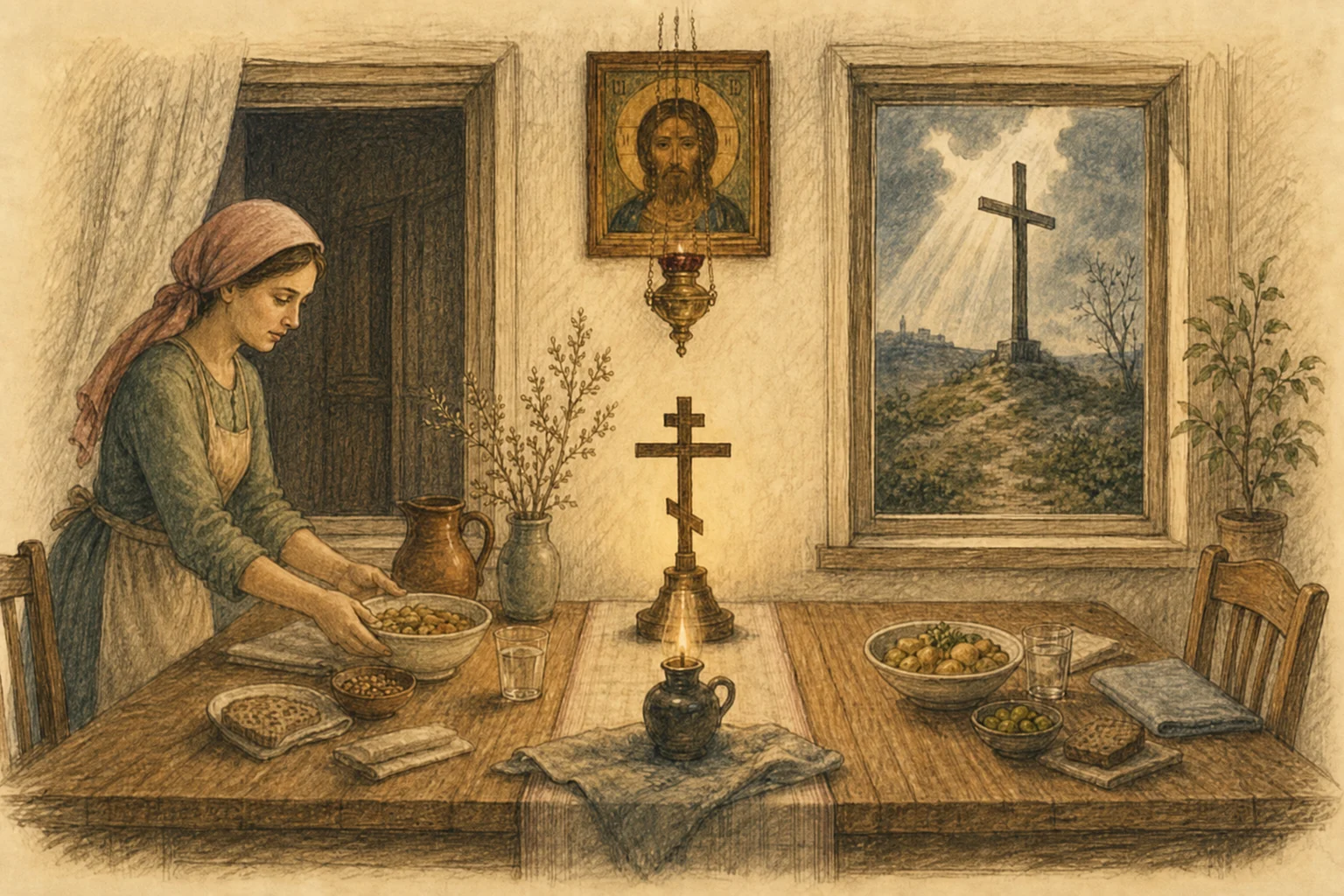
Orthodox Christians fast on Wednesday in remembrance of Christ’s betrayal and on Friday in remembrance of His Crucifixion and death on the Cross. This weekly pattern is a rhythm of repentance and gratitude, not a declaration that certain foods are unclean and not a technique for obtaining favors from God.
The food rule depends on the church calendar, health, and concrete circumstances. The fast is omitted during designated fast-free weeks and may be relaxed for particular feasts. Illness, pregnancy, childhood, and demanding labor require a reasonable personal measure.
Why Wednesday became a fast day
Wednesday’s liturgical memory recalls the betrayal by Judas and the beginning of the path toward the Passion. The Church does not invite us merely to condemn Judas but to recognize our own capacity to exchange faithfulness for advantage, fear, or convenience.
Wednesday becomes a pause inside the working week: examine motives, end a divided life, ask forgiveness, and choose Christ again.
Why Orthodox Christians fast on Friday
Friday keeps the memory of the Cross. Christians remember the Savior’s love in voluntarily accepting suffering and death for the world, and try to answer through mercy as well as a changed meal.
This is not a weekly funeral without hope. The Cross is always seen in the light of the Resurrection, so Friday abstinence is serious but never hopeless.
An ancient rhythm of the Christian week
Wednesday and Friday were established as fast days in the early Christian community. Their regular return teaches that repentance is not a rare emotional impulse but a small act of faithfulness practiced every week.
The two days form a rhythm between Sunday Liturgies. Sunday gathers the community around Christ’s Resurrection; Wednesday and Friday keep faith from disappearing into the speed of ordinary life.
What food is normally omitted?
On an ordinary fasting Wednesday or Friday, Orthodox laypeople abstain from meat, dairy, and eggs. Whether fish, oil, or other foods are permitted depends on the calendar date, feast, and local tradition.
Do not transfer a monastic chart to a household without discernment. For most laypeople, a simple and adequate diet without expensive substitutes or anxiety over every crumb is the more honest practice.
Why the calendar must be checked
The church year contains fast-free weeks when the ordinary Wednesday and Friday abstinence is omitted, as well as feast days with a relaxed rule. The practice therefore cannot be applied from memory without regard for the date.
Use the calendar of your Orthodox jurisdiction and the current parish schedule. If two sources appear to conflict, ask the priest instead of beginning an argument at the family table.
What is a fast-free week?
A fast-free week is a designated period in which the usual Wednesday and Friday food fast is not kept. Such weeks are associated with major feasts or preparatory seasons and express either festal joy or the particular logic of the liturgical cycle.
Freedom from the food rule is not permission for intoxication, gluttony, or cruelty. Gratitude and care for one’s neighbor remain Christian responsibilities on every date.
When a feast falls on a fast day
The liturgical rule may permit fish, oil, or another relaxation, depending on the feast. A red date in a civil calendar changes nothing by itself, and a family birthday does not automatically cancel the fast.
It is possible to share joy without theatrical severity. Arrange a suitable dish beforehand, do not lecture other guests, and do not make the host feel guilty.
Fasting concerns more than ingredients
Abstinence frees attention and exposes habits that damage relationships: irritation, gossip, endless scrolling, impulsive consumption, alcohol, or humiliating someone weaker.
Choose one concrete act: refuse a hostile conversation, call someone lonely, set aside money for help, or read the Gospel in the evening. The food rule becomes intelligible when it leads toward love.
Prayer on Wednesday and Friday
There is no need to invent a vast additional rule. Keep the ordinary morning and evening prayers, then add a few quiet minutes, a penitential prayer, or a Gospel passage concerning the Passion.
A beginner may use our guide to beginning prayer at home. A short attentive prayer every week is better than a rare feat that makes the whole practice collapse.
Almsgiving and practical help
The amount saved on an expensive meal need not be large. What matters is learning to share: support a trustworthy appeal, bring groceries to an older neighbor, help a family, or give time to someone who is rarely heard.
Help does not purchase God’s favor. It restores the Gospel direction of fasting and prevents the practice from becoming a private diet.
How this differs from fasting before Communion
On Wednesday and Friday the kinds of food change during the day. The Eucharistic fast means complete abstinence from food and drink in the hours immediately before the Chalice. One practice does not replace the other.
When Communion is planned on a fast day, preparation follows the parish order. See our guide to fasting before Holy Communion for the medical and pastoral details.
Illness, pregnancy, and treatment
Diabetes, digestive disease, pregnancy, breastfeeding, and medical treatment may make an ordinary food rule unsafe. Fasting food must remain sufficient and compatible with care.
The clinician establishes medical boundaries; the priest helps find a spiritual form within them. A person may keep the necessary diet while giving up excess and adding prayer or an act of mercy.
Children and teenagers
First explain why Wednesday and Friday matter, then offer a small measure: fewer sweets, a simpler meal, less entertainment, and a shared act of help.
Do not deprive a growing body of required protein and energy, and do not compare children. A teenager is more likely to receive a meaningful household practice than a prohibition adults quietly evade.
Work, travel, and eating away from home
Prepare simple food ahead of time: grains, vegetables, legumes, bread, nuts, or a suitable soup. A safe snack on a journey is wiser than fasting all day and overeating at night.
If the workplace offers few choices, take what is available without a public speech. Fasting should not prevent responsible work, cause fainting, or require everyone else to manage your strictness.
Guests and the family table
Tell a host calmly and without a complicated list of demands. Choose an available fasting dish or side, or ask the priest beforehand how to handle an unusual situation.
Do not inspect another person’s plate. A neighbor’s meal is not your spiritual report, and someone who does not fast is not an object for public correction.
What if I forgot and ate non-fasting food?
Do not consume everything for the rest of the day because “it is already ruined,” and do not punish yourself with hunger. Notice what happened and return to the chosen measure with the next meal.
If forgetting is habitual, set a quiet reminder and plan food on Tuesday and Thursday evenings. Spiritual life grows through returning, not through despair.
The danger of visible severity
A person can read every label perfectly while treating the household with impatience. The Gospel warns against fasting for display. The goal is not to make others notice deprivation and praise exceptional devotion.
A modest rule that makes you kinder is better than costly fasting delicacies joined to anger. If the practice intensifies anxiety or an eating disorder, speak to a qualified clinician and a priest.
A practical one-week plan
On Tuesday evening, check the calendar and prepare simple food for Wednesday. On Wednesday morning remember faithfulness to Christ; in the evening examine words as well as ingredients. On Thursday prepare again without self-congratulation.
On Friday unite remembrance of the Cross with concrete help. Briefly review the week on Saturday and participate in Sunday Liturgy when possible. The two days then belong to one coherent Christian week.
Common questions
Must every Wednesday and Friday be fasting days?
Ordinarily yes, but the church calendar includes fast-free weeks and festal relaxations. Always check the actual date.
Is fish permitted?
That depends on the day and feast. No single answer covers every Wednesday and Friday; follow the calendar and parish practice.
Should I fast if I am not receiving Communion?
The weekly fast is not only preparation for the next Communion. It is a general rhythm of Orthodox life, received according to one’s strength.
What about demanding physical work?
Keep adequate calories and hydration, plan the diet, and discuss a relaxation. Safety is consistent with the purpose of fasting.
May I begin with only one day?
Yes, if the complete practice is not yet sustainable. Begin honestly, grow gradually, and continue the conversation with your priest.
The essential point
Wednesday recalls betrayal; Friday recalls the Cross. These two days return the week to the Gospel and teach faithfulness in small things.
Check the calendar, protect health, refuse to judge others, and join food abstinence to prayer and mercy. A weekly fast then does not narrow life; it makes life more attentive.