
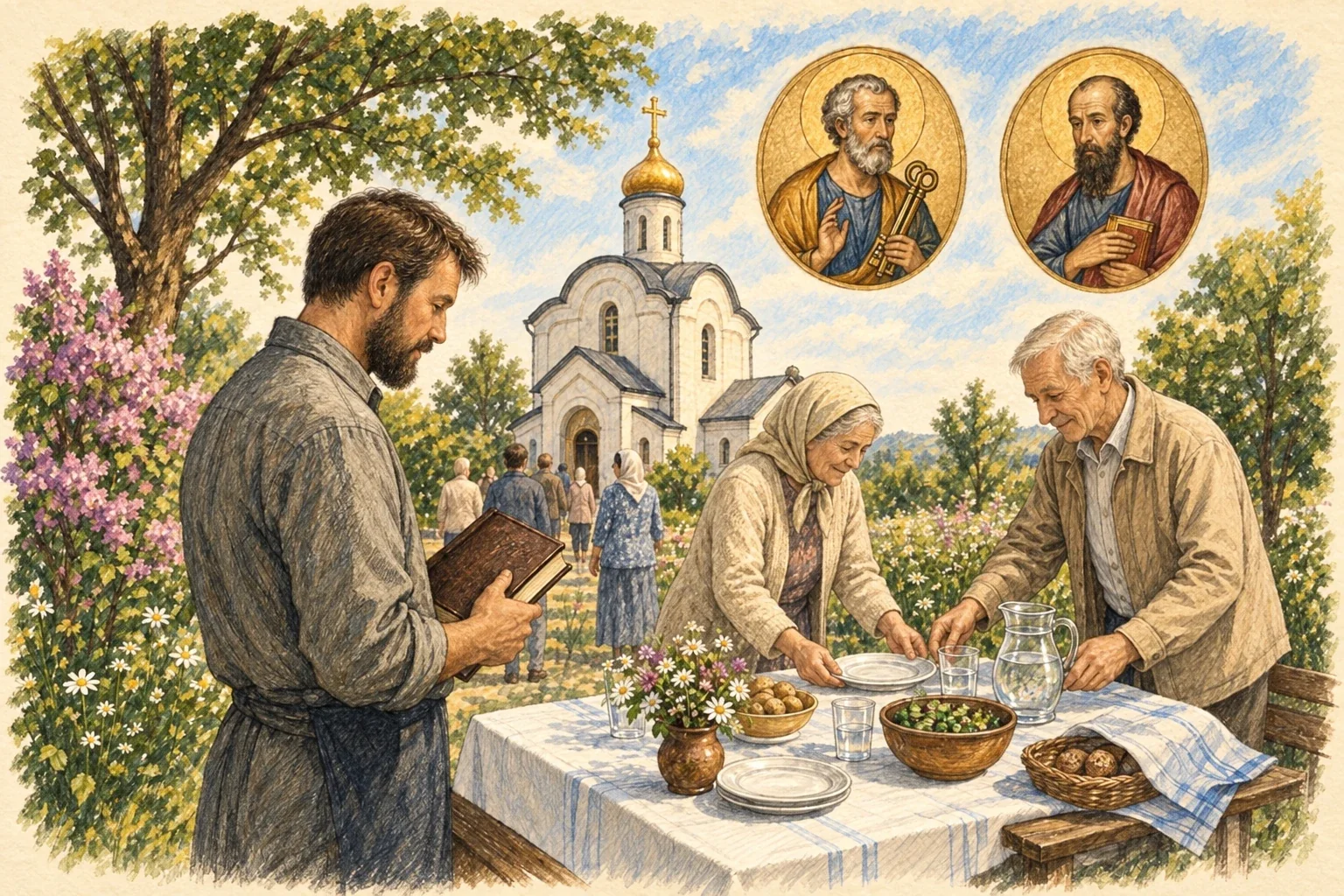
The Apostles’ Fast, also called the Fast of Saints Peter and Paul, begins on the Monday after the Sunday of All Saints and ends before their common feast. Its length changes with the date of Pascha. Its purpose is to learn apostolic faith, prayer, sobriety, and service after Pentecost.
In the civil calendar used by the Russian Orthodox Church, the feast of Peter and Paul falls on July 12. The food rule is often less austere than Great Lent, but this does not make the season unnecessary or merely a relaxed summer option.
Why the beginning changes each year
After Pascha, the Church celebrates the Ascension, Pentecost, and the Sunday of All Saints. The Apostles’ Fast begins the following day. Since Pascha moves, the beginning moves as well.
The conclusion before the July feast remains fixed in this calendar, so one year is longer and another shorter. Consult the current calendar rather than remembering a date from an old post.
How long does it last?
Within the calendar tradition of the Russian Orthodox Church, its length can range from a little more than one week to six weeks. This is a normal feature of the movable cycle, not an error.
A short fast need not be made artificially severe in order to compensate. Spiritual purpose is not measured by the number of restricted breakfasts.
Why it is called the Apostles’ Fast
The season is connected with the mission of the Church after the descent of the Holy Spirit. The apostles carried the Gospel, prayed, endured hardship, and formed communities. Christian faith is not intended only for private consolation.
Witness begins with an honest life, responsibility for speech, and readiness to serve. Loud preaching combined with cruelty at home contradicts the apostolic spirit.
Why Peter and Paul are commemorated together
Peter was one of the Twelve and traveled from fervent promises and denial to repentance and pastoral ministry. Paul first persecuted the Church and then became an apostle to the nations. Their histories differ, but both reveal grace and a free human response.
The feast does not conceal their weakness. It proclaims that the past does not have to define a person forever when repentance becomes a way of life.
The food rule
The general rule excludes meat, dairy, and eggs. Fish is permitted on many days, while Wednesday, Friday, and particular dates carry another measure. Confirm the precise order in the calendar and parish practice.
Do not turn summer abundance into an endless feast. Simple seasonal food can support work and prayer without culinary display.
Why this fast is easily overlooked
It follows the bright Paschal weeks, when vacations, gardens, and travel have already begun. Public culture offers no prominent preparation for the apostles’ feast, so the church rhythm is easily missed.
Place both the beginning and feast in your calendar, locate worship early, and choose one practice. A conscious short path is better than a sudden memory on the eve of the feast.
Prayer and reading
Read Acts and selected apostolic epistles in small portions. Notice not only miracles and journeys but conflicts, community decisions, relief for the poor, and the cost of witness.
Keep the ordinary prayer rule. If Scripture remains difficult, begin with our article on reading the Gospel at home.
Witness without intrusion
Faith can be shared only with respect for another person’s freedom. Do not use the fast for pressure on colleagues, aggressive comments, or debates in which victory matters most.
Answer a real question honestly, admit what you do not know, and demonstrate faith through action. An invitation to church must not contain a hidden threat or promise of a miracle.
One person to whom I can carry hope
Think of one person who is having a difficult time, but do not begin with instruction. First ask what would help, listen, and keep the promise you make. If the person raises the question of faith, describe your experience without diagnosing his or her entire life.
Apostolic witness does not require everyone to preach publicly. A parent who asks a child’s forgiveness, a worker who refuses deception, and a neighbor who delivers food consistently already speak a language that can be tested.
Service in the parish
The Apostles’ Fast is especially suited to practical participation: cleaning, delivering food, supporting a children’s activity, or visiting someone lonely. Begin with a responsibility that can be repeated.
Ask about current needs through the parish contact page. Do not promise more time than you actually possess.
Worship and the feast
Choose Sunday Liturgy and worship on the eve or day of Saints Peter and Paul. Consult the schedule. If the feast falls on a working day, ask about morning and evening possibilities.
Do not reduce the end of the fast to permission for fish or richer food. Its summit is the church’s commemoration of the apostles and the Eucharist.
Confession and Holy Communion
The fast provides an opportunity to examine spiritual life and come to Confession without the crowds of Holy Saturday. Do not produce an inventory of another person’s sins; speak about your responsibility.
Agree on preparation for Communion personally. A multi-day fast does not replace reconciliation, prayer, and the Eucharistic rule.
Summer travel and vacation
Before a journey, locate a church, understand food options, and carry a simple snack. When choices are limited, do not create conflict with hosts or staff; keep the measure actually available.
Vacation does not cancel prayer, but it permits another rhythm. A short rule and Sunday Liturgy may become steadier away from ordinary work noise.
Gardening and physical labor
Work in heat requires water, salt, energy, and adequate nutrition. Do not create dehydration. Choose simple food while accounting for medical restrictions.
The fast of labor may include help for an older neighbor, refusal of irritation, and gratitude for the harvest, not only the composition of lunch.
When the family does not fast
Do not turn a shared summer table into a loyalty test. Prepare dishes that everyone can share and add differences separately. Do not comment on another person’s plate.
Children receive an age-appropriate measure. Pregnant women, the ill, and older adults follow medical advice; see fasting during illness.
May a wedding be held?
Orthodox Crowning is generally not celebrated during a longer fasting season. Civil registration and family circumstances are discussed separately, while the sacramental date must be agreed with the parish before booking a celebration.
Do not search for a parish that will bypass the calendar. Our article on pre-marital talks before Crowning explains the proper sequence.
A plan for a short Apostles’ Fast
Choose Sunday Liturgy and the apostles’ feast, read one chapter of Acts at a time, keep a sustainable food rule, restrict one form of digital noise, and accept one parish responsibility.
When the fast is long, do not add new rules every week. Stability is more valuable than constant complication.
After breaking the rule
An accidental meal while traveling does not erase the path. Continue at the next meal and do not interrogate yourself for hours. A deliberate choice can also be acknowledged without despair.
Consider what was missing: planning, sufficient food, courage to explain calmly, or a reasonable dispensation.
Common questions
Why is the Apostles’ Fast a different length every year?
It begins after the movable dates of Pentecost and All Saints but ends before the fixed feast of Peter and Paul.
May Orthodox Christians eat fish?
On many days, yes, but not all. Check the actual calendar day and your personal measure.
Does a very short season still matter?
Yes. Do not intensify it artificially; join sustainable food restraint to prayer and service.
May I travel?
Yes. Prepare food and service information, and maintain peace and proportion when choices are limited.
What should I read about the apostles?
Begin with Acts, then read the apostolic epistles in short portions with trustworthy commentary.
The essential point
The Apostles’ Fast continues the experience of Pentecost: the gift of the Holy Spirit turns a person toward witness and service. Its subject is not only a summer menu but mature faith capable of going out to another.
Let its lasting result be one retained practice: Scripture reading, a parish task, truthful speech, or regular help.