
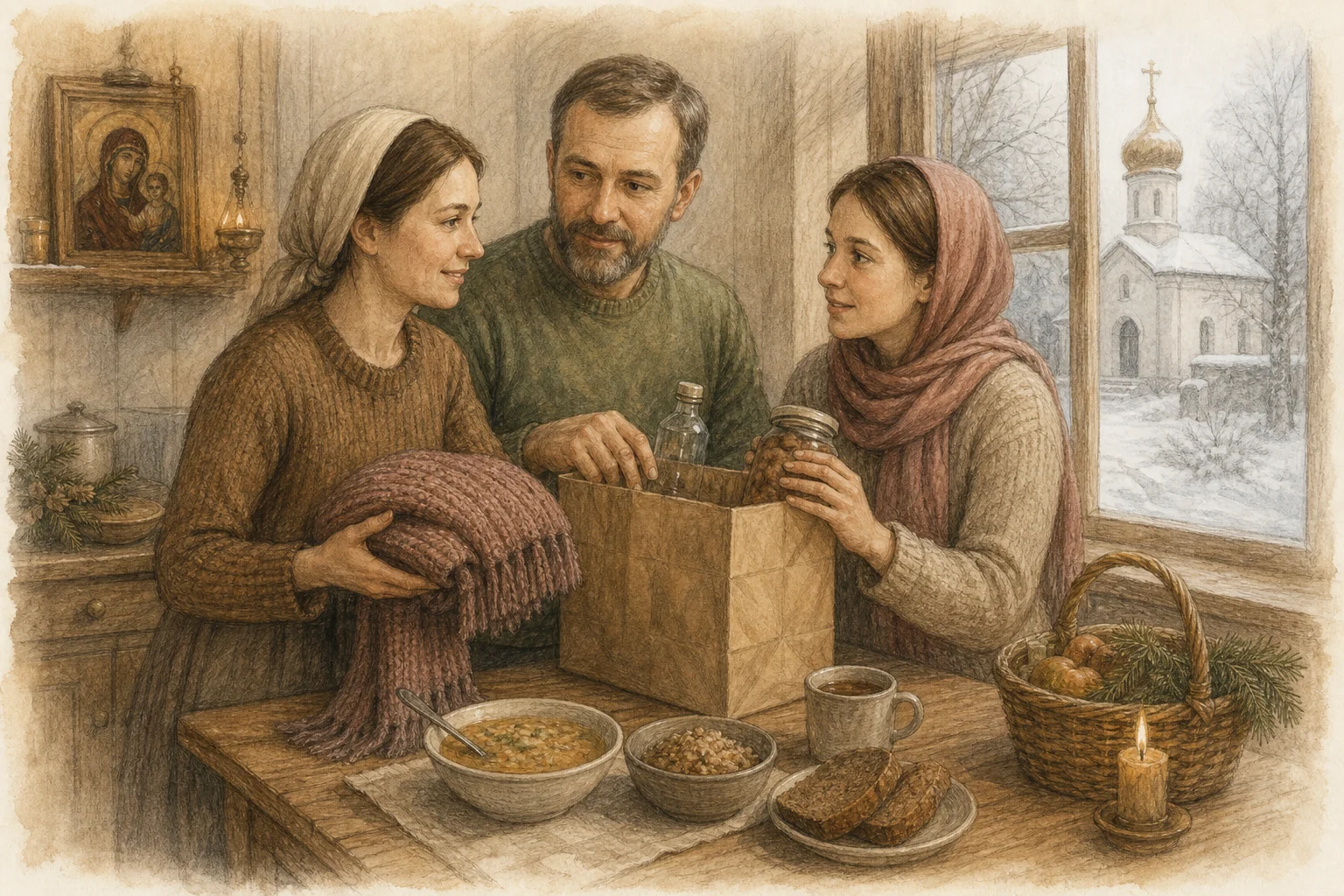
The Nativity Fast is a forty-day preparation for the Nativity of Christ through prayer, food abstinence, Confession, mercy, and freedom from unnecessary hurry. In the Russian Orthodox Church it normally runs from November 28 through January 6, with the Nativity celebrated on January 7.
Its liturgical character is less austere than Great Lent, but it occurs during the loudest season of shopping and social events. Its particular work is to preserve attention to the Incarnation amid advertising, year-end pressure, and celebrations.
Why forty days?
The forty-day measure connects this fast with the biblical experience of preparation and spiritual journey. It does not mean that every day has the same liturgical or food rule.
It is sometimes called Saint Philip’s Fast because it begins after the feast of the Apostle Philip. This historical name does not make the entire season a commemoration of one apostle.
When it begins and ends
In the calendar used by the Russian Orthodox Church, the fast begins on November 28 and concludes with the Nativity Eve on January 6; the feast is January 7. Orthodox jurisdictions using another calendar may observe different civil dates.
Do not follow a foreign calendar without knowing its tradition. Consult the current parish service schedule.
What are Christians preparing to meet?
The Nativity proclaims that the Son of God becomes human and enters actual human history. Preparation is therefore not the manufacture of a winter mood. It is an encounter with Christ, who shares human poverty, vulnerability, and life.
Ask whether there is room for Him in your time, home, budget, and treatment of someone weak. The answer appears in action as well as prayer.
The food rule
The general rule excludes meat, dairy, and eggs. Fish, oil, and wine are permitted or restricted according to the calendar, and the rule becomes more austere near the feast. Check each day in an Orthodox calendar.
Laypeople account for health and seek individual guidance when needed. The general principles are explained in Orthodox Fasting: Its True Purpose.
Why maximum severity is a poor beginning
A beginner may design a complicated menu, add a long prayer rule, and abandon everything within a week. A stable diet, brief prayer, and one work of help are better.
Severity that makes a person angry with the household indicates a need to reconsider the measure. This is not permission for indifference; it is a return to the purpose.
Prayer during the season of expectation
Read the Gospel accounts leading toward the Nativity: the genealogies, Annunciation, visitation of Mary to Elizabeth, and birth of Saint John the Baptist. Do not rush immediately to the familiar festive scene.
Keep the ordinary morning and evening rule. Our guide to reading the Gospel at home helps a beginner establish a simple practice.
The liturgical path toward the feast
As the fast continues, hymns increasingly announce the approaching Nativity. Sundays, the commemorations of the Old Testament forefathers and fathers, the Royal Hours, the Eve, and the festal vigil carry particular importance.
Do not attempt every final service for the first time without sleep or food. Select the principal worship according to strength and ask about length beforehand.
Confession and Holy Communion
Do not postpone Confession to the single crowded line on January 6. Come earlier, especially after a long absence. Discuss the frequency of Communion and preparation with the priest.
The fast is not an automatic ticket to the Chalice, while an accidental ingredient does not make weeks of repentance meaningless.
Mercy instead of seasonal display
Winter creates particular needs for warm clothing, medicine, food delivery, and human company. Choose a verified need and help without turning the recipient into a background for a photograph.
A gift for your child does not contradict the fast. The question is whether shopping occupies the whole heart and whether room remains for someone who cannot give anything in return.
Handling pre-holiday shopping
Set a budget and list, reduce impulsive orders and debt-financed gifts, and do not measure love by packaging. Time, conversation, and shared service are often more valuable than an object.
Savings need not be donated publicly. Quiet support for a family or parish work is enough.
Civil New Year during the fast
The civil New Year falls in the final days of the Nativity Fast. An Orthodox Christian may meet peacefully with family, give thanks for the year, and keep an appropriate meal without judging guests.
Drunkenness, overeating, and a midnight quarrel are not mandatory customs. When the household practices differently, discuss food and boundaries beforehand without an ultimatum.
Work parties and social events
You may attend where work or important relationships reasonably require it, choosing available food and remaining sober. There is no need to announce every prohibition or assess colleagues.
If an event predictably leads to loss of self-command, it is reasonable to leave early or decline. Fasting trains a free choice, not the image of a severe person.
When not everyone in the family believes
Do not force a spouse or adult relative to adopt your measure. Prepare a common base and add other foods separately. Do not treat the smell of another person’s meal as an insult to faith.
Quiet prayer, service, and freedom from irritation witness more convincingly than argument. Children need an age-appropriate rule without hunger or shame.
Nativity Eve and the custom of koliva
January 6 is the Eve of the Nativity. The traditional name in Russian is connected with a grain dish. A strict custom of waiting to eat until the first star has liturgical meaning, but it is not a universal medical instruction for the ill, pregnant women, children, or beginners.
Follow the service, health needs, and pastoral guidance. The first star is not a magical switch authorizing overeating.
Illness and winter workload
Winter infection, chronic disease, and physical work may alter the diet. Prescribed medication and therapeutic food remain. Our article on fasting during illness offers a safer framework.
If you become ill before the feast, stay home rather than infecting the parish. Prayer and care for others remain possible without physical attendance.
Preparing the home without agitation
Clean what is necessary, prepare a simple meal, and plan travel and sleep. Do not turn perfect cleanliness and decoration into a reason to shout at family members.
A home is ready for the feast not when every surface shines but when another person can be received in peace.
A four-stage practical plan
At the beginning, establish food and prayer. In the middle, add regular mercy. Before New Year, protect the budget and sobriety. During the final days, make room for Confession, worship, and quietness.
If one stage was missed, do not punish yourself with sudden severity. Return to the next available step.
Meeting the Nativity
Participate in festal worship when possible, accounting for health, transport, and children. After Communion, thank God and share the meal without competition.
Do not finish the fast offended by someone who prepared the wrong salad. The fruit of preparation is love, not a victorious menu.
Common questions
May Orthodox Christians eat fish during the Nativity Fast?
On appointed days, yes. Permission depends on the calendar and stage of the fast; check the actual date.
May a family celebrate civil New Year?
A family gathering can retain a fasting measure and sobriety. Its form should not destroy preparation for the Nativity.
Must everyone wait for the first star before eating?
This is not a universal medical rule. Strict practice must be coordinated with worship, health, and pastoral guidance.
May children receive gifts during the fast?
A good ordinary gift is permitted. Join it to attention, prayer together, and help for someone in need.
May I begin in December?
Yes. Begin today with a real measure instead of waiting for another November.
The essential point
The Nativity Fast creates room for Christ amid winter commotion. Its supports are simple food, attentive prayer, Confession, worship, sober shopping, and mercy.
The feast arrives not because everything has been prepared perfectly, but because God enters human life. Preparation teaches us to receive Him and our neighbor.